07/21/15

Beauté CONGO 1926-2015 CONGO KITOKO

SONY DSC

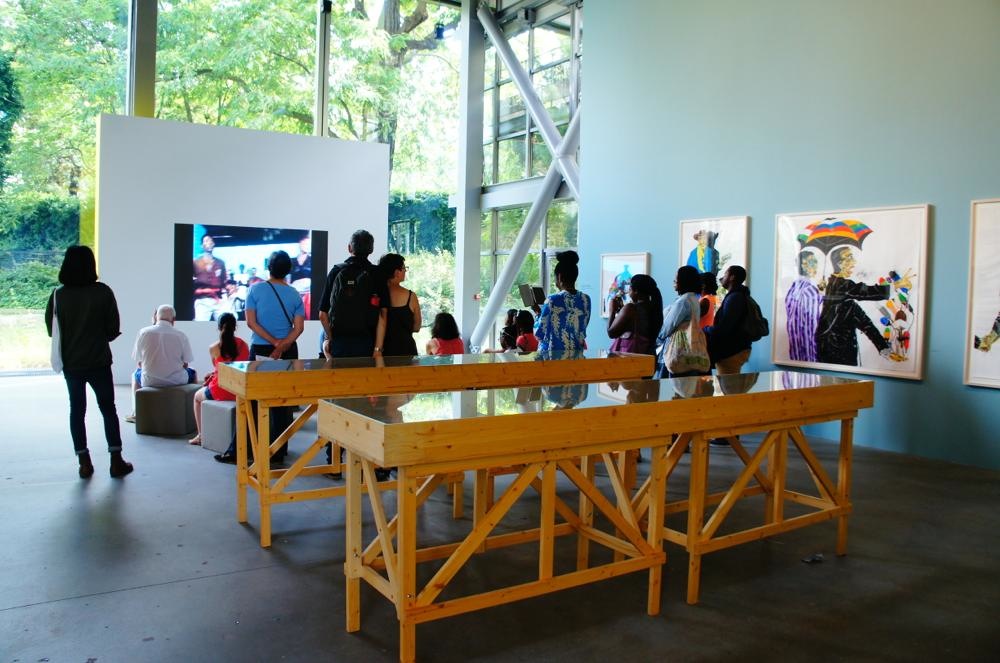
7月11日に開幕したばかりのFondation Cartier pour l’art contemporain で開催中の展覧会Beauté Congo 1926-2015に行ってきました。地下が歴史的展示、地上階は現代アーティスト(1970年代から現代)そして庭ではサウンド・インスタレーションがありました。

SONY DSC
SONY DSC
SONY DSC

JP Mikaは1980年生まれの画家で、本展覧会展示アーティストの中でも最も若い。
キンシャサのボザール出身でChéri Chériのアトリエで学んでいる人気画家。

SONY DSC

SONY DSC

絵画にはティシューを使っています。典型的な大柄の布にペインティングをするというものも多い。

SONY DSC

SONY DSC

SONY DSC

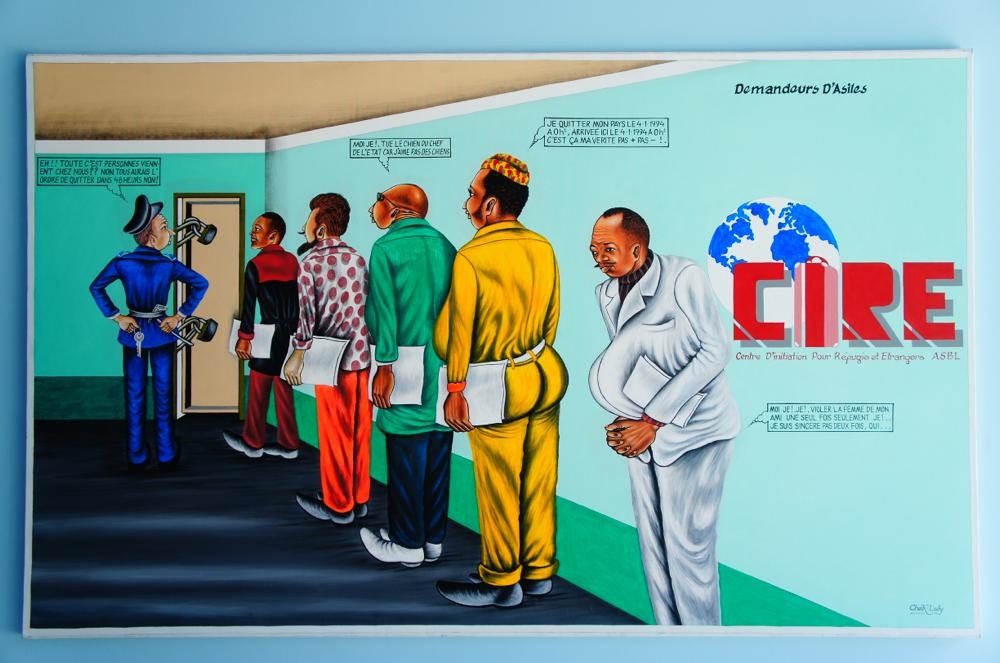
風刺画が非常に多い。カリカチュアの文化があります。
避難所に逃げ込みたい人々が列を作っている(上)
プレジデントに話し合いに応じるよう訴える(中)
動物たちが議会を開いているがそこにはPolitiqueをもじってPourritique(Pourriは腐ったという意味です)(下)

SONY DSC

このバンドデシネ的なタッチの絵画は1970年代から活躍したChéri Sambaの貢献に拠る所が大きい。ポピュラー絵画のジャンルをコンゴで立ち上げた先駆者でもある。

SONY DSC

母の腹から出てこないUn vieil enfantのカリカチュア。
国家の独立とは何か、というシビアな問題に関する作品です。

SONY DSC


SONY DSC

SONY DSC

興味深かったのは1990年代から2000年代のコンゴの雑誌のコレクション。
バンドデシネ文化が分かる。

SONY DSC

SONY DSC

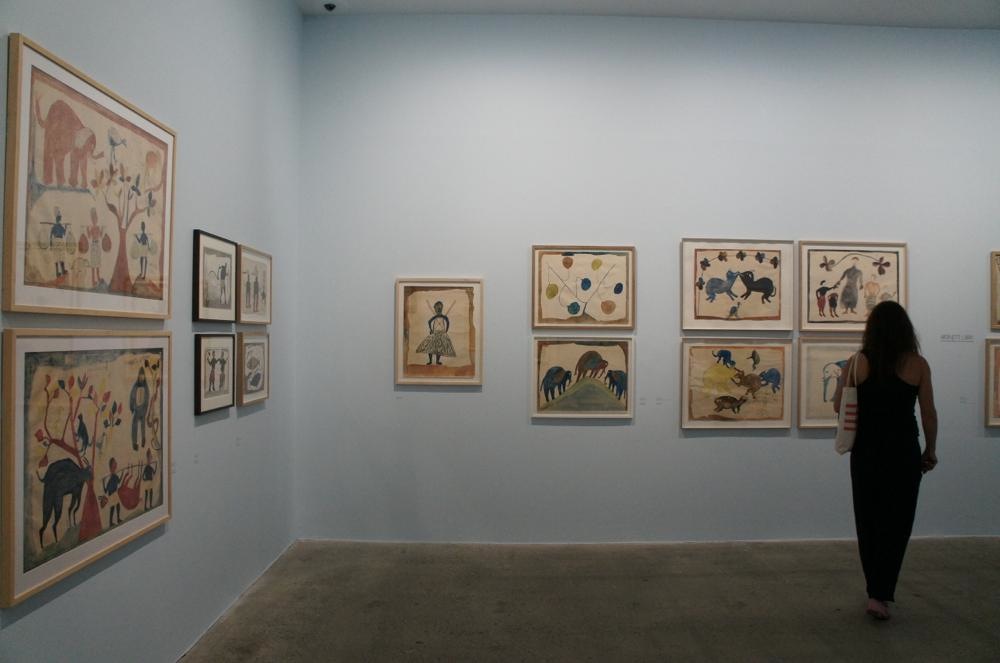
地下の階では1920年からのヨーロッパがコンゴ美術と出会ってからの歴史的作品。
1926年にベルギーのGeorge ThiryがBukamaやKatangaで様々な職人と出会い、水彩画に必要な画材などを伝えたようです。
1946年以降のフランスのPierre Romain Desfossésが作ったElisabethville学校というのは、通称Atelier du Hangarと呼ばれて、もっとコンゴ美術に深い影響を与えています。画法も強制せず、イマジネーションも自由に、ということだったようですが、国際的な展示や交流機会は、コンゴの美術家たちに大きな影響を与えたことは間違いないと思います。

SONY DSC

展覧会は11月15日までです!
http://fondation.cartier.com/fr/art-contemporain/26/expositions/1771/en-ce-moment/1789/beaute-congo/

07/21/15

Installation par Keita Mori @Galerie Catherine Putman

SONY DSC

Installation par Keita Mori @Galerie Catherine Putman
(Voici, c’était cette exposition)
11665408_916909135039693_4991339905499255305_n

Keita Mori, artiste japonais, est un spécialiste de dessin fait par le « fil ». On connait des artistes qui utilisent des fils comme matériaux principaux tel Chiharu Shiota (qui représente actuellement le pavillon japonais à la Biennale de Venise) mais l’usage des fils de Keita Mori est différent. Différent ou bien précaire.

SONY DSC

Le fil comme matériau est en principe utilisé pour nouer des objets, créer un lien entre les deux objets, fixer des corps solides, construire une structure des fils, voire même pour devenir une masse (comme un de ces aboutissements serait un tissu). Chez la série de « Bug report » de Keita Mori, le rôle du fil ne s’y limite pas.

SONY DSC

Son fil ne crée pas forcément un lien stable mais laisse des objets en suspens. Au lieu de construire une architecture absolue, son fil est pendu avec son bout libre. Une construction déjà faite est parfois toute démolie par l’artiste lui-même tout en gardant des traces de la colle (mise par le pistolet) sur sa surface rêche. C’est le fil même qui cherche sa place. Le fil cherche à s’installer à son lieu. C’est pourquoi sa série s’appelle peut-être « Bug Report ». Le destin (le résultat) est fondé sur le hasard – le mouvement libre du fil ou l’intuition de l’artiste.

SONY DSC

Nous avons récemment travaillé ensemble (lors de l’installation – performance « Peace Report 2015 – Corpus » : web article http://www.mrexhibition.net/wp_mimi/?p=3777). Son fil a joué encore un rôle différent. C’était, une part, un dominant qui détermine l’ensemble de la signification de tous les écrans ouverts sur le mur. D’autre part, un subordonné qui est ballotté par la forte image (des fragments des articles des journaux coupés par les participants), qui est pré-déterminé par le lien sémantique (textes et images des articles). Ce qui me tient comme intéressante signification du fil chez l’oeuvre de Keita Mori est, me semble-t-il, cette nature éphémère.

Keita Mori : artiste website http://keitamori.com

SONY DSC

07/15/15

Newspaper woman (Shinbunonna, 新聞女), Miyuk Nishizawa (English text)

Newspaper woman (Shinbunonna, 新聞女), Miyuk Nishizawa

On March 9, 2013 @Guggenheim Museum – A great night of something happened…
In early February 2013, Newspaper woman, her comrades and some AU members (Art Unidentified*) arrived in the USA. Kiki Nienaber (Director of Fuse Art Infrastructure) and Gregory Coates (Co-director of Lollipop Operations) hosted the Japanese artists in Allentown. They lived under the same roof for a month, each day bringing to life artistic events titled « Lollipop Gutai Influences. » These included performances, exhibitions and workshops in Allentown and New York.

Shozo Shimamoto, Co-founder of the Gutai arts movement in postwar Japan and Miyuki Nishizawa’s dear mentor, was clinging to his last moments of life when Miyuki received a personal invitation to perform at The Guggenheim Museum. Shimamoto passed away January, 25, 2013. Miyuki and the Newspaper Girls immediately abandoned their paid return tickets to Japan and vowed to meet the challenge to infuse the Guggenheim Museum with Shimamoto’s expressive spirit, to deliver happiness to all visitors participating in the events and to transmit that happiness not through just one night performance but as an infinite newspaper dream!
*Guggenheim museum held the exhibition « Gutai : Splendid Playground » February 15 – May 8, 2013

The powerful performance lasts until midnight. The backstage is in chaos, filled with newspapers and working staff while visitors arrive at the entrance. The event opens with an exceptional newspaper dress whose hem reaches to more than 30 meters long. A sign instructs visitors: « Please walk under here ». This work is in homage Shozo Shimatmoto, one of whose participative and interactive works is called « Please walk on here » (1955).

Participants are supposed to walk under the long hem of the artist’s huge skirt. They can touch the dress to turn it up, making a newspaper arc for visitors passing under. This long hem is intricately cut like lace fabric, making a sophisticated shadow on the floor (look at the picture!) In walking under the artist’s skirt, the exciting ambiance envelops us.

After the opening performance « Please walk under here », a parade starts with assorted newspaper costumes and characters. Panels of Yoshiko Yamamoto’s photography on the museums long slope involve the visitors on the floor while people donning larger-than-life newspaper jackets and Miyuki and the Newspaper Girls parade together in newspaper dresses. According to Miyuki, the concept of the giant jacket is « to enjoy wearing it and looking at people wearing it…even if the most intelligent university professor wears it, they will look so stupid! That’s the advantage of this work!”

Following the parade, a giant newspaper Teddy Bear appears slumped on the floor! A monster covered with newspaper shredded as thin as angel-hair pasta hair dances eccentrically around the giant teddy bear. Old-fashioned Japanese popular songs Enkas, 演歌 or Miyuki’s original music (BGM), drift through your ears while you risk being stuck with bizarre, colorful labels indicating a discount price on your clothes. These are the same labels used to indicate discounts in Japanese grocery stores. Everything here makes us laugh and feel happy!

In the final act of this Gutai experience, you’ll find Miyuki on the Guggenheim’s spiral ramp, wearing a beautiful cloth which is one of Shozo Shimamoto’s real works. She looks like an elegant and beautiful fairy.

Gutai mind and the birth of the Newspaper Woman
Shozo Shimamoto (1928-2013.1) is one of founding members of the Gutai Art Association. Shimamoto coined the term « Gutai » – “embodiment” in Japanese. He is known for performance paintings such as cannon shooting painting, crane performance painting etc. He also founded the art association « AU » (Art Unidentified) which aims to give amateurs an artistic experience. In his later years, he contributed to these activities to educate and help people through the arts. The term « Shimamoto meme » refers to the transmission of Shimamoto’s artistic mind and attitude towards the arts. This attitude is shared by many, including Miyuki, who was moved and touched deeply by his art and life. She is a follower of the Gutai conviction that Art is an activity for the liberation and opening of minds. Through her art, Miyuki overcame difficulties in her life. Art helped her to destroy the heavy chain that had long fastened her heart and then smash it into fragments.

In her youth, she suffered from strained parental relationships and social pressures formed by banal stereotypes. Pains she felt are not far from those we have when wearing un-suitable clothes, or by a corset confining our body from the chest to the hip. « Nyotaku »*, one of the most significant works of Shozo Shimamoto is worth analyzing. This important work received much unfair criticism and was misinterpreted by those who lack the capacity to understand its purpose. It was treated as a downright scandal in Japanese society. A play on the word “Gyotaku,” or “fish print/impression,” “Nyotaku” literally means “Female print.” Nyotaku is an ink rubbing of a female body on paper. Miyuki stripped naked to model for the Nyotaku works, at one point completely nude. Ben Shimons, a renowned American photographer, was deeply interested in Nyotaku, saying that in Nyotaku women are natural and free, representing their lives as they were. Miyuki became one of Ben Simons’ best loved models. He appreciated her inner energy and brilliant beauty. A young Miyuki gradually came to understand positive energy as the most important thing to survive in this world. The nourishing of her strong, exposed soul through her Nyotaku experience and Ben Simon’s photographic work helped her to find her way towards “Newspaper Woman.”

Miyuki is always smiling. In each of my personal encounters with her, and in her pictures online, she radiates happiness. I believe smiling people have a naturally positive influence on the world and enable the spread of joy by sheer presence. Smiling people are essentially much stronger than those who carry a depressed and sad look wherever they go. Miyuki’s positive energy, something most worthy of being transmitted from one individual to another, is precious and irreplaceable.

Newspaper woman and newspapers
Newspaper woman uses newspapers as the main material for her artworks. Every day, vast quantities of newspapers are published to inform their readers of news, only to be thrown away soon after. Newspapers are printed day by day in vain… Before working as an artist, Miyuki Nishizawa, studied fashion at university and worked for a company as designer for 12 years. She was unmoved by the high-paced fashion industry and the contemporary consummation society. She felt sick watching those around her carry out a lifestyle where material objects are purchased in great quantity and frequency only to be ignored or tossed aside. Indeed, the high-speed apparel industry’s scheme is very similar to that of newspapers as a materialized mass media. She decided to drop out of the barren cycle of consummation in order to start carrying out artistic activities by using newspapers as compensation for things she had abandoned thus far.

Shozo Shimamoto, her master, also used newspaper as a material for painting in the beginning of his career. The work is commonly known as « Holes »(1954, Shozo Shimamoto, Work Paint on newspaper, Ashiya City Museum of Art & History ). Its concept was born from the same moment of the avant-garde artist, Shozo Shimatmoto. Shimamoto, whose parents had not allowed him to major in arts at the University, decided to apprentice himself to Jiro Yoshihara(the leader of Gutai Art Association founded in 1954). Shimamoto painted everyday without capturing Yoshihara’s approval. In those days, just 5 or more years after the end of World War Ⅱ, the young man who lacked financial means to buy canvas, superimposed newspapers on the wood frame, coated it with boiled flour (imported from the U.S.A through the GHQ*) and finished with white paint. One day when he was pressed to finish a painting, a hole was ripped on the canvas because its surface hadn’t yet dried. –  » Am I the first artist who invented a painting with a hole ? » – As he expected, Yoshihara ardently praised the « broken » painting and he afterwards gained a positive reputation abroad. When Shimamoto’s early works obtained a durable existence with a permanent place in several museums, then newspaper canvas’ were fossilized at the cost of its liberty. In contrast, newspapers in Miyuki’s works are free and represented very differently: mobile, cut into fragments, shredded, teared, modeled, touched, worn, and thrown away immediately after her performances. Her newspapers live through a brief, joyful existence for the sake of Newspaper Woman’s performance participants.

*GHQ (General Headquarters): After the World War, the Allied Powers held by Douglas MacArthur ruled Japanese government during the Occupation of Japan. Supreme Commander for the Allied Powers (SCAP) is the official title however GHQ was the term generally used in Japan.

The « Eco-Art » (Art for the ecology) is not the only reason Miyuki uses newspapers. If you look more carefully into the real signification of the use of newspapers in her artworks, you can clearly understand the important character of newspapers as a « mass media ». Contrary to the beauty and joy in her artworks, the contents of newspapers always represent information about horrible accidents, scaring wars, durable tribal conflicts or political discords and bad business. When we let our eyes to follow these articles about depressing events, we cannot avoid getting the impression that the world is filled with tragic stories, and actually, it may be a kind of truth.

I’d like to introduce one of the most reputable works titled « Peace Road », presented in a famous Japanese art magazine, Bijutsu-Techo on June 2004. In this work, she faced the tragedy of 9.11 of the U.S.A by collecting paper articles about the issue. She blotted out the part concerning 9.11 with five colors: blue representing our planet, and white, black, red, yellow representing people’s skin colors. She created a 1.2 km long newspaper “Peace Road” passing through a shopping arcade in Kobe. An earnest hope for world peace and for contributing to people’s happiness is shared concepts in Miyuki’s work. This project is replicated worldwide, including several places in Japan and at Saint Mark’s square in Venice, setting paper streets round the globe!

On February 11 2013, Monumental crane performance in Allentown
The crane performance is symbolic of the dynamism and energy of Newspaper Woman. While Shimamoto’s crane performances were carried out to make a giant painting by throwing colorful, ink-filled glass bottles from the sky, it is Newspaper Woman herself who becomes a living sculpture in her crane performance. She wears a giant, 20 meters long newspaper dress. The giant paper skirt can enclose the spectators observing her from the ground as they look up into her skirt! Miyuki has a serious pathological fear of heights. However, her fears are undetectable as she appears chilled out and happy in the sky, sometimes releasing an elegant blizzard of falling newspaper fragments, like cherry blossom petals. The first task in Allentown this February was the crane performance. The preparation lasted all-night. There was heavy snowfall. Needless to say, rain or snow is most inconvenient for the paper works which break easily when wet. Journalists, local media interviewers and even the mayor of Allentown city came to see the spectacle. Miyuki felt heavy pressure knowing she was to carry out this performance in the place of the late Shozo Shimamoto, that is to say, she wouldn’t be excused of any small mistakes.

This celebrated performance ended in great success, surrounded by applauding spectators and their smiles.
« Then, I was caught by some odd sensation. Before, I had been down on the ground clapping my hands with other spectators, to cheer him on. However, this time I was in Mr.Shimamoto’s place, looking down at the people on the ground. » said MIyuki.

The triumph of the crane performance in Allentown has a crucial significance for members of Shozo Shimamoto atelier, Newspaper Woman’s group and Miyuki Nishizawa herself.
Her dear master “has retired from his activities in the real world, » leaving amazing and testing opportunities for her and her comrades. This sensitive and fragile Nyotaku model has now become an independent artist who, suspended alone in the sky by a big crane, is applauded by people on the ground. Sometimes she appears in public elegantly or sometimes suddenly, like a guerrilla, making her beautiful music and dance experiences to spread joy to all people present. Everything she makes exists for « liberating people’s minds » and for delivering happiness to each person she meets.

She said,
« I have succeeded in freeing my mind thanks to the arts, as well as Mr.Shimamoto and many friends around me as well. Then, I want to help people who currently have difficulties living joyfully by liberating their minds from their suffering, even if for just a moment. I hope this happiness will be spread to young people of the next generation. »


Author :

Miki OKUBO
Born in 1984, in Sapporo, Japan
Docteur, Art Critic, Essayist, lecturer at the Université Paris 8.

document en PDF (télécharger)
Shinbunonna_Essay_MikiOkubo_Eng

SONY DSC

06/1/15

PEACE REPORT 2015 – « CORPUS » 盛圭太・西澤みゆき・大久保美紀

PEACE REPORT 2015 – « CORPUS »

パフォーマンス=インスタレーション作品「PEACE REPORT 2015 – « CORPUS »」は、西澤みゆき(新聞女)の作品「ピース・ロード」と、盛圭太による糸をメディアとしたドローイング・シリーズ「Bug Report」におけるコンセプトとモチーフが出会い、ダイナミックに結びつき、分断され、互いが変容する中で生み出された異型の再解釈の提案である。作品コンセプトの構築に関わって、私自身、盛圭太・西澤みゆきと語り合った。
10987369_10206046492387546_7143811323273494233_n
作品「PEACE REPORT 2015 – « CORPUS »」は、何よりもまず、世界への積極的コミットを念頭に置いた表現である。平和への希求、端的に要約すればそのことに他ならないかもしれない。しかし我々が体現しようと試みたのは、あくまで現実の中にある幸福の追求に似た行為であるように思う。我々は、自由で豊かな想像の中では、パラダイスのような夢を見たり、理想主義的なディスコースを繰り広げたり、眩くて直視できないほど美しい客体などをでっちあげることが可能だ。カタルシスのようなもの、それはなるほど、芸術の一つのミッションであるのかもしれない。私たちが、盛圭太と西澤みゆきが、シャルリー・エブド襲撃事件から3ヶ月が経過したパリの中心で構築しようとしたのは、しかし、フィクションとしての平和の希求ではない。
DSC_6823
盛圭太のドローイング・シリーズ「Bug Report」とは、ピストル型のノリで糸を固定し、カッターで切断することによって壁やキャンバスに描き出される糸によるドローイングである。盛によって描き出される画面は、あるときは密集した構造を表し、あるときは放っておかれた自由な一本の糸がたるんだまま存続することを許している。また時には、精緻に構築された糸の造形は、アーティスト自身によって、バリバリと音を立てて破壊され、そこには造形の跡としてのノリの欠片や剥がされた紙の毛羽立ちが遺る。シリーズのタイトルである「Bug Report」は、誤謬(Bug)を孕んだ関係性の構築と読むことも出来るし、あるいはその誤謬そのものがオートノミーの性質を持っていて霊媒(fantom)的に客体を結びつけようとする自律的な営みそのものであるとも、読むことが出来る。
DSC_6753

盛のコンセプトが西澤のピース・ロードと結びつくのは偶然とも必然とも言うことができるが、西澤の作品「ピース・ロード」が2001年9月11日のニューヨーク連続テロの世界的衝撃と一瞬にして崩れ去った平和の脆さへの気づきから始められ、世界中を平和の象徴である一本の道で繋ぐことを目指しながら、これまで日本国内はもちろん、ベネチアなど海外でも実践されていることを鑑みれば、出会いは運命的であると感じられる。「新聞による一本の道」は無論メタファーで、断片として世界に遍在しうるし、オートノミーでもあり得る。突如パリの中心にある盛のアトリエを拠点に、これを結ぼうとする参加者によって自主的に道が開かれることも、作品「ピース・ロード」の延長線上にある出来事なのである。
DSC_6675

私たちの日常は、おぼつかない安心の元に拠っている。無根拠な平和への信頼、安全への信用、穏やかな日々は、束の間に失われる。あるいはまた、常に生きにくい人生を生き続ける人だって大勢いる。アートはそのような非常事態において有用性を問われ、直ちに無用であると切り捨てられるか、あるいは傷ついた人々の心を癒すために必要であるとかろうじてセラピストとしての才能を認められるか、高々その程度の評価である。それ以上の意味や有用性が、表現行為にはあるだろう。リアリティを直視しながら、その過酷な世界に、私たちの家族や、恋人や、子どもや子孫たちが置き去りにされていくという事実から目を背けることなく、生き続けるということについて積極的に紡ぐべき表現行為を、共有する術はきっとあるだろう。

DSC_6820

盛のアトリエの壁は、参加者たちによって切り出された昨今の新聞記事の見出しや写真、記事の一部、政界の著名人、経済界のニュース、紛争や戦争のニュースや写真、意味の分からぬ言語を切り抜くもの、偶然裏表が違ってしまったまま壁に貼られたもの、本来の記事の文脈を失ったテクスト、分断されたイメージ、それらが糸によって結びつけられたり、糸によって孤立させられることによって、無数の窓を持つことになった。切り出された各々の平面はつまり、個別のスクリーンとしての役割を果たし、それらは盛がコントロールするレゾーの構成要素となったり、なり得なかったりする。思えば我々の情報の受容とはこのように断片的・主観的でしか有り得ないものなのだが、その情報のピックアップとリエゾンの行為が複数の個人によって同時に行なわれ、共有される空間のなかで、可視的で可触的なスクリーンとして遍在するとき、その意味はもはや別のものになる。

« CORPUS »。盛はこの集積を想像して、こう呟いた。

共有される空間は我々にとっての内側であり、それには外側を想像することができる。共同体が包まれているものをひっくり返したとしたら、新しい内側にもやはり曖昧な結びつきが広がるだろう。情報のアーカイブのような空間としての »CORPUS »、意味があるようで意味のない、関係があるようで関係のない、存在様態の「集積」。それは我々の身体の内側にまでレゾーを引き込むことができる、リアルなあり方なのだ。

パフォーマンス=インスタレーション作品「PEACE REPORT 2015 – « CORPUS »」は、2015年4月17日、盛のアトリエで生じ、開かれた無数の窓は、潜在的に、閉じない。

DSC_6780

感謝:
アーティスト 盛圭太、西澤みゆき
写真 Manon Giacone
撮影 杉浦岳史
参加者の皆様

04/10/15

PEACE REPORT 2015

Peace report 2015
Texte français → 日本語
17 avril 2015, 15:00 @Cité Internationale des Arts

Il s’agit d’une performance en collaboration avec Keita Mori et Miyuki Nishizawa dans laquelle la série Bug Report de Keita et la performance Peace Road de Miyuki se mêlent l’une à l’autre.

La performance Peace Road a été conçue par Newspaper Woman après l’attentat du 11 septembre 2001 face à la fragilité de la paix. En rallongeant le « chemin » (la bande faite) en papier-journal coloré en cinq couleurs, elle réalise cette performance partout dans le monde afin de souhaiter la paix éternelle. Ce chemin se prolongera continuellement jusqu’à ce qu’il couvre toute la Terre de son amour paisible.

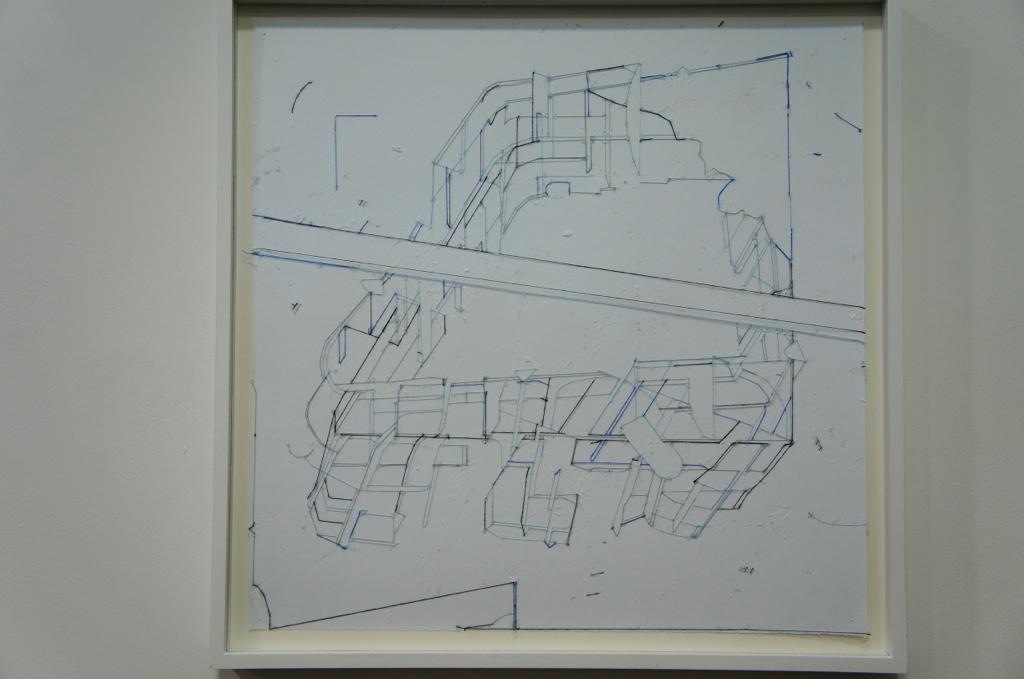
Inventée par Keita Mori, jeune artiste vivant et travaillant à Paris, la technique de la réalisation de la série Bug report montre un travail incroyable à la fois systématique et précaire. Ce qui compose ses dessins, ce sont des fils coupés et de la colle. La surface du dessin garde des traces comme souvenirs du temps passé. Le titre de la série « Bug report » fait allusion à des erreurs « bug » qui est un terme informatique mais qui signifiait également « un effet fantôme ». L’artiste joue avec ces éléments du hasard, tout en acceptant la conséquence de l’improvisation artistique. Chaque fragment autonome et indépendant peut communiquer l’un avec l’autre, établissant une structure en réseau.

La paix n’est pas un état stable. À cause des catastrophes humaines et naturelles, elle est constamment en danger. Que fait-on avec l’art dans une situation difficile ? Alors, l’art est-il inutile ? Newspaper Woman s’habillant en papier journal n’arrête jamais de réaliser des performances qui ont but de porter bonheur à tout le monde. Elle sait que le partage d’une expérience transmettant l’espoir nous permet de « vivre ». C’est ce qu’on n’appelle l’utilité de l’art.

Grâce à l’interprétation de Keita Mori, ce chemin de la paix se transformera en une installation spatiale qui créera une forme relationnelle, en permettant aux visiteurs de partager une expérience inouïe.

Texte, concept par Miki Okubo

10987369_10206046492387546_7143811323273494233_n

このパフォーマンスは、西澤みゆき(新聞女)のPeace Roadと盛圭太ののBug Reportが互いに結びつけられ、異なる作品として再解釈されたものである。

新聞女の作品《Paece Road》は、2001年9月11日のニューヨーク連続テロの世界的衝撃と一瞬にして崩れ去った平和の脆さへの気づきから始められた長期的プロジェクトである。これまで、日本国内はもちろん、ベネチアなど海外でも実践され、世界中を平和の象徴である一本の道で繋ぐことを目指す。一本の道はもちろんメタファーであり、世界中に断片として遍在しうるし、オートノミーでもあり得る。

Keita Moriの作品Bug Rapportは、カッターで切り取った糸をピストル型のノリで一本ずつ紙面に貼付けることによって、具象的あるいは象徴的イメージを表現する。そこにはいつもBug(情報用語では誤謬のことだが、古くは霊媒(fantom)的なもの、人間のコントロールの外側で勝手に働くような作用を意味した)があり、予期せぬ偶然が、在る出来事の裂け目となって、異なる局面を生み出す。精密に繋ぎ合わされて構成されているように見えるKeita Moriのデッサンはその細部を見ればフラグメント化し、それぞれが独立しているのだが、しかし同時にやはり全体が関係性を築いている。

平和への信頼はいつの時代も無根拠である。9.11やシャルリーエブドの事件、あるいは3.11のような自然災害によってすら、温和な日常は束の間に失われることを我々は知らしめられる。非常時におけるアートの有用性はいつも極めて曖昧な結論に晒される。それでも新聞女が、新聞を纏いながら人々を笑顔にしようと右往左往するのをやめないのは、希望を感じられる経験を他者と共有し、その経験によって人々を生きさせることがアートの力だと知っているからである。

コラボレーションのアイディア、盛圭太の再解釈を受けて、この平和の道は空間的インスタレーションとして広がり、それは新しい関係性を想像しながら人々に新しい経験をもたらすだろう。

大久保美紀(文・コンセプト)

04/10/15

Workshop « Journée avec Miyuki : Habillons-nous en papier-journal » / ワークショップ「新聞女の日:新聞を着よう!」

J’ai le plaisir de vous inviter au workshop « Journée avec Miyuki : Habillons-nous en papier-journal » qui aura lieu le 17 avril, suivi par la découverte de la performance collaborative avec l’artiste japonais Keita Mori et le parcourt agréable pour des prises des photos-souvenirs aux lieux importants de la ville de Paris.

Appris la couture à l’université, travaillé pendant 12 ans dans le domaine de la mode, Miyuki utilise ses techniques et ses connaissances riches pour produire des robes en papier-journal. Mais pour Miyuki, s’habiller en papier-journal ne signifie pas un simple acte amusant. L’artiste considère que le quotidien est un média qui nous informe souvent des mauvaises nouvelles, tels des catastrophes, des accidents et des histoires tristes. Transformer les journaux en vêtement et les porter nous permettrons de bouleverser le sens de ce média de masse, nous offrant une nouvelle expérience d’être ouvert d’esprit grâce à cette pratique.

Commençons dans la matinée la création de vos vêtements avec Miyuki, ensuite nous nous rendons au lieu de la performance en collaboration avec Keita Mori. Puis, nous inviterons tous à prendre des photos-souvenirs avec Miyuki à certains lieux importants. (Bien, cette journée dense est suivie par un apéritif chez moi…)
Venez nombreux ! Pour le détail et plus d’information, n’hésitez pas me contacter.

***Rendez-vous : à l’entrée principale de l’Université Paris 8 à 10h40.

11115587_10206035182704811_2753927797765757650_n

ワークショップ「新聞女の日:新聞を着よう!」を4月17日に行ないます!とっても楽しいワークショップです、ぜひふるってご参加ください。お友達、お子様、ご近所様、どなたでも参加できます。

西澤さんの新聞コスチュームの制作には、彼女が大学で服飾を学び、アパレル企業で十数年勤務した経験が生かされています。ただし、西澤さんにとって、新聞を着るのはただ単に楽しむためだけではありません。「新聞」というのは、大抵悪いニュースを私たちに運んできます。大災害や事故、悲しい話題が多いです。その「新聞」をすばらしいコスチュームに変身させ、それを着ること、それは、このマスメディアの背負ってきた運命や意味をすっかりひっくり返してしまうと同時に、それを着た私たちにとてもハッピーな経験をもたらす意味があるのです。

4月17日は、午前中、みなさんと新聞コスチュームを作ります。そして、午後、パリ内で行なわれる新聞女×盛圭太(盛圭太さんは、「糸をつかって描く」独自の技法で驚くべき作品を制作されている気鋭のアーティストです)のパフォーマンスに出会いましょう。そして、新聞女と愉快な新聞仲間としてパリ中の大切なスポットで、記念写真を撮影しに街に繰り出しましょう。(皆様、撮影が終わったら大久保のウチでアペリティフしましょう。ぜひ来てください。)

とにかく楽しいので皆さんお越し下さい。部分参加勿論オッケーです。詳細、どうぞ私までコンタクトしてください。
***Rendez-vous : à l’entrée principale de l’Université Paris 8 à 10h40.
10320605_814055941996090_8091211927591615890_n

03/26/15

新聞女 4月15日正午 パリ第8大学 / Intervention de Miyuki Nishizawa, Newspaper Woman, le 15 avril 2015 à Saint-Denis

Please walk under here, Guggenheim NewYork, 2013

Please walk under here, Guggenheim NewYork, 2013

J’ai le plaisir de vous inviter à l’intervention-performance de Miyuki Nishizawa, autrement appelée Newspaper Woman, dans le cadre du cours « Création littéraire » à l’Université Paris 8, le 15 avril 2015.
Miyuki Nishizawa, vit et travaille à Osaka et Kobe au Japon, est l’un des successeurs directs du mouvement artistique Gutaï. Miyuki Nishizawa a développé sa conception artistique avec son maître Shozo Shimamoto, artiste. Miyuki Nishizawa a été invitée pour une performance au Musée Guggenheim à New York en 2013 et a participé à de nombreuses manifestations culturelles non seulement au Japon mais aussi dans divers pays comme la France et l’Italie.

Elle utilise le papier journal, en tant que média, rempli souvent par de nombreux événements tristes, édité, imprimé et jeté quotidiennement. L’art de Miyuki réalisé en papier journal n’est pas qu’art écologique (car elle recycle le papier), mais transforme ces informations tragiques en énergie positive pour nous encourager à vivre, s’habillant d’une magnifique robe de papier journal. Porter bonheur et nous amener à la paix mentale à travers sa performance : ce sont les deux objectifs de l’art de Miyuki.

À cette occasion, elle nous racontera son idée artistique, son parcours original et ses projets en cours. Ensuite elle présentera une oeuvre intitulée « Peace Road » conçue après les attentats du 11 septembre. Il s’agit d’une performance pour souhaiter la paix dans notre monde où il peut y avoir différentes cultures, différentes religions, différentes racines. Cette oeuvre importante a été réalisé au Japon, en Italie et dans d’autres pays. À l’occasion de cette intervention, j’ai le plaisir de vous inviter à témoigner de cette nouvelle version réalisée à Saint-Denis, et à partager un moment significatif.

MIyuki Nishizawa suspendue, performance de la grue

MIyuki Nishizawa suspendue, performance de la grue

2015年4月15日正午、パリ第8大学における『現代的文学創作』の授業の一貫で、新聞女こと西澤みゆきさんをお招きし、講演−パフォーマンスを行ないます。

西澤みゆきさんは、大阪・神戸を拠点に日本全国で多彩な活動を繰り広げられているアーティストで、具体美術協会の直接の後継者でもあります。西澤さんは、具体設立メンバーのひとりである嶋本昭三さんの弟子であり、彼と共に世界を巡り、芸術的コンセプトを発展させてこられました。新聞女は、2013年3月ニューヨークグッゲンハイム美術館に招待され、1000人のヴィジターのためのパフォーマンスを実現するほか、日本のみならず、世界中で数多くの文化的行事や芸術イベントに参加しています。

西澤さんの利用するメディア「新聞」は、日々、多くの悲しい出来事を私たちに伝えます。それは毎日大量に印刷されてはすぐに捨てられてしまいます。新聞紙を利用する新聞女のアートは、しかし、単なるエコ・アートではありません。彼女は新聞紙からなる見事なドレスを纏うことで、その悲劇的なニュースの堆積をポジティブなエネルギーに変換し、私たちを元気づけ、生きさせてくれるのです。幸福をもたらすこと、平和を祈ること、これが彼女のアートの本質と言えるでしょう。

さて、4月15日の講演−パフォーマンスでは、西澤みゆきさんにこれまでの活躍、ちょっと変わった経歴、これからの野望などを語ってもらいます。それから、9.11以降世界中で平和を祈るために続けられているパフォーマンス作品『ピース・ロード』のサン・ドニ(フランス)ヴァージョンをお披露目します。世界は多元的で、異なる文化と、異なる宗教、そして異なる人種が入り交じっています。彼女のアートはそのような世界における平和を希求するものです。どうぞ、お友達、ご家族、ご近所の方と一緒にお越し下さい。いっしょに、『ピース・ロード』サン・ドニ版の目撃者となりましょう!

Peace Road, Venise

Peace Road, Venise

Pour plus d’info, merci de me laisser un commentaire.
詳細は、大久保美紀(@MikiOKUBO)までご連絡ください。あるいはこちらにコメントをお送りください。

03/19/15

Exposition « Sans Crayons » L’autre dessin:Juliette Mogenet, Keita Mori, Takeshi Sumi

Exposition « Sans Crayons » L’autre dessin

Juliette Mogenet, Keita Mori, Takeshi Sumi
Exposition du 16 au 21 mars 2015
Vitrine – 65, Paris
More info : ArtBridge Contemporary Website
SONY DSC

今週いっぱい開催中の展覧会Exposition « Sains Crayons » L’autre dessin (鉛筆をつかわないーもう一つのデッサン)を訪れた。展示作家は、Juliette Mogenet、Keita Mori、そしてTakeshi Sumiの三人の画家だ。彼らは展覧会タイトルが伝える通り、鉛筆を使用しない、異型のデッサンを提案する。

Juliette Mogenetの作品は、一枚の写真のような非常に具象的なイメージから、それに裂け目を入れたり、部分を取り去ってしまったり、あるいはカッターで出来る限りの細い糸のような彫刻に写真を部分的に分解してしまうことによって、元々のイメージにはなかったディメンションを創り出すものである。そこでは、新たな空間が開かれ、綴じられていたイメージの世界は空洞を包有し、こわされていると同時に産み出されている。
SONY DSC
SONY DSC

Juliette Mogenet Website


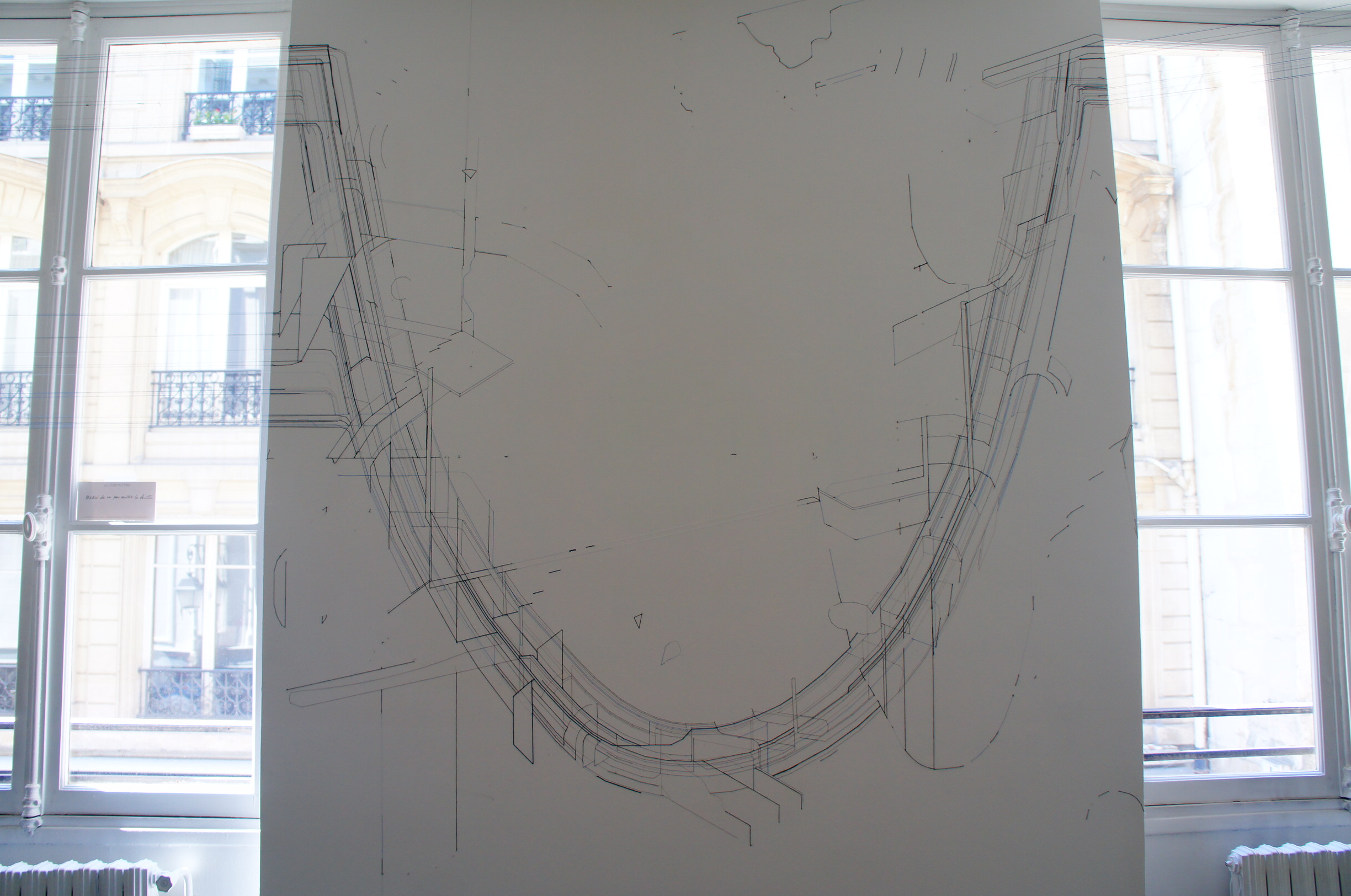
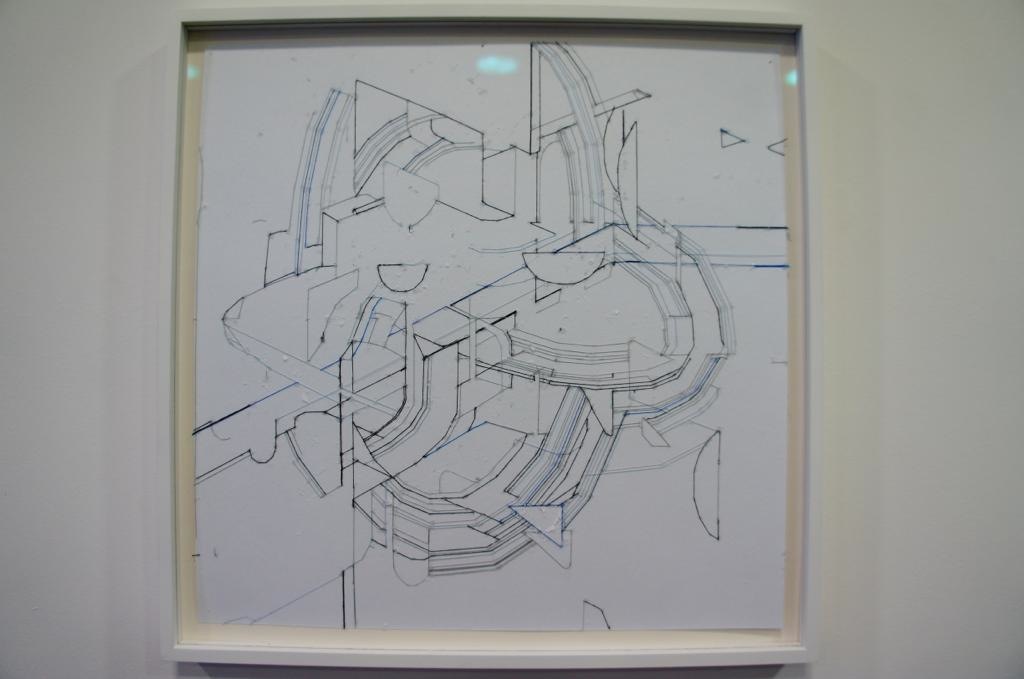
Keita Moriの展示作品は、Bug reportと題されたシリーズで、糸とピストル型のノリを利用して、紙面にあたかも線を描くように造形して行くアーティスト固有の絵画方法を用いている。作品は小さなものから非常に大きなもの(例えば昨年の展覧会会期中に完成されたBug report « circuit »は500×570cmの大作である)に渡り、画面の造形の密度も様々である。ときにそれは具象絵画であり、在るときはまた幾何学的なイメージを表象する。技法(作品)タイトルが暗示しているように、作品は制作および完成後の時間においてもなお「バグ(Bug)」と共にある。バグは情報用語でエラーを指すが、もともとこの言葉には人間のコントロールの範疇を越えた霊的力による作用を意味した歴史もある。Keita Moriの作品ではこのエラーの要素が重要な役割を演じることが多い。
SONY DSC
SONY DSC

Bug report (circuit), 2014 fil tendu avec pistolet à colle sur mur,500x570cm vue de l'exposition, «Voyageurs», Paris

Bug report (circuit), 2014
fil tendu avec pistolet à colle sur mur,500x570cm
vue de l’exposition, «Voyageurs», Paris

Keita Mori Website


Takeshi Sumiの作品も写真を異化することによって産み出された絵画だ。表面には思わず息をのむほど細かいカッターの線が無数に、そして精密につけられていて、その整列した軌跡のアンサンブルは、大海原を旅する小魚の大きな群れが一斉に海面に照り返した瞬間のようなきらめきを見せる。セーヌ川の上に鳥が舞う、その川面に影の映っている、そんな日常のイメージは、見たこともない一枚の絵画となって立ち現れる。また、作者自身の父のポートレートに無数の穴をつくり、それらが光を通すことによって産み出されたイメージは、そこに映し出された一人の男性が、アーティストの父親という個人に過ぎないにも関わらず、不思議にも既視的で普遍的な人物像のように現れる。
SONY DSC
SONY DSC
Takeshi Sumi Website


Keita Moriの彫刻が有難い感じでギャラリー入り口に展示されている。会期中絶えず形状を変更することのできるインフィニティの作品だ。あまりに有難い様子なので、ついお賽銭をお供えさせていただきました。
展覧会は、21日までだそうです!
SONY DSC
SONY DSC

03/19/15

表現の自由のこと: Steven Cohen, COQ (2013) /スティーヴン・コーヘン「ニワトリ」

表現の自由のこと

2015年1月7日のシャルリー・エブド襲撃事件があってから、フランスはもちろん、世界中で今一度、表現の自由のことを多くの人が語るようになった。だがそれは、いわば、世界単位でシャッターがきられた瞬間に過ぎず、たとえば日本では、検閲や思想統制の危機に直面して、あるいは憲法改善の危機や個人の表現の自由を脅かす様々な法令の制定の危機に直面して、2015年1月7日以前にすでに、今と変わらない危機感が既にあった。思想や文筆の領域はもちろん、現代アートの領域にも、表現者を見せしめにするような象徴的な事件があった。たとえば、釈放されては再逮捕される、ろくでなしこさんの女性器3Dデータに関する問題は、法に触れるという明確な理由があったとしても、その周辺に存在するより商業的なポルノグラフィティの問題や、男性器に関する同質の行為は果たして同等に制裁をうけているのか、といった疑問をぬぐい去ることができない。また、昨年、愛知県立美術館の「これからの写真展」で鷹野隆大さんの写真作品が男性器を露にしているという理由で、わいせつ物として撤去を指示された問題も、今日のヴィジュアル・アートを俯瞰したならば、一瞬にして、ナンセンスな事件であったというしかない。ただし、「ナンセンスな事件」がもっともらしく、あるいは威圧的にまかり通り、人々がそれに従順にならざるをえないという状況こそが、もっともナンセンスであり、しかも、深刻な破綻を意味している。アートの空間は、美術館であれ、一時的に設定されたスペースであれ、そこに非常事態を抱え込む覚悟をしなくてはならない。アートの出来事は一種の非常事態にほかならないからだ。それは、アートが存在する理由にも、アートの存在する意味にも関わる。

何も覚悟することなく、人を驚かすつもりもなく、あるいは人々が驚いてしまったときに即座に「今のは噓でした!」と言ってしまうような表現が、我々に何かを残すだろうか。我々の何かを与えるだろうか。

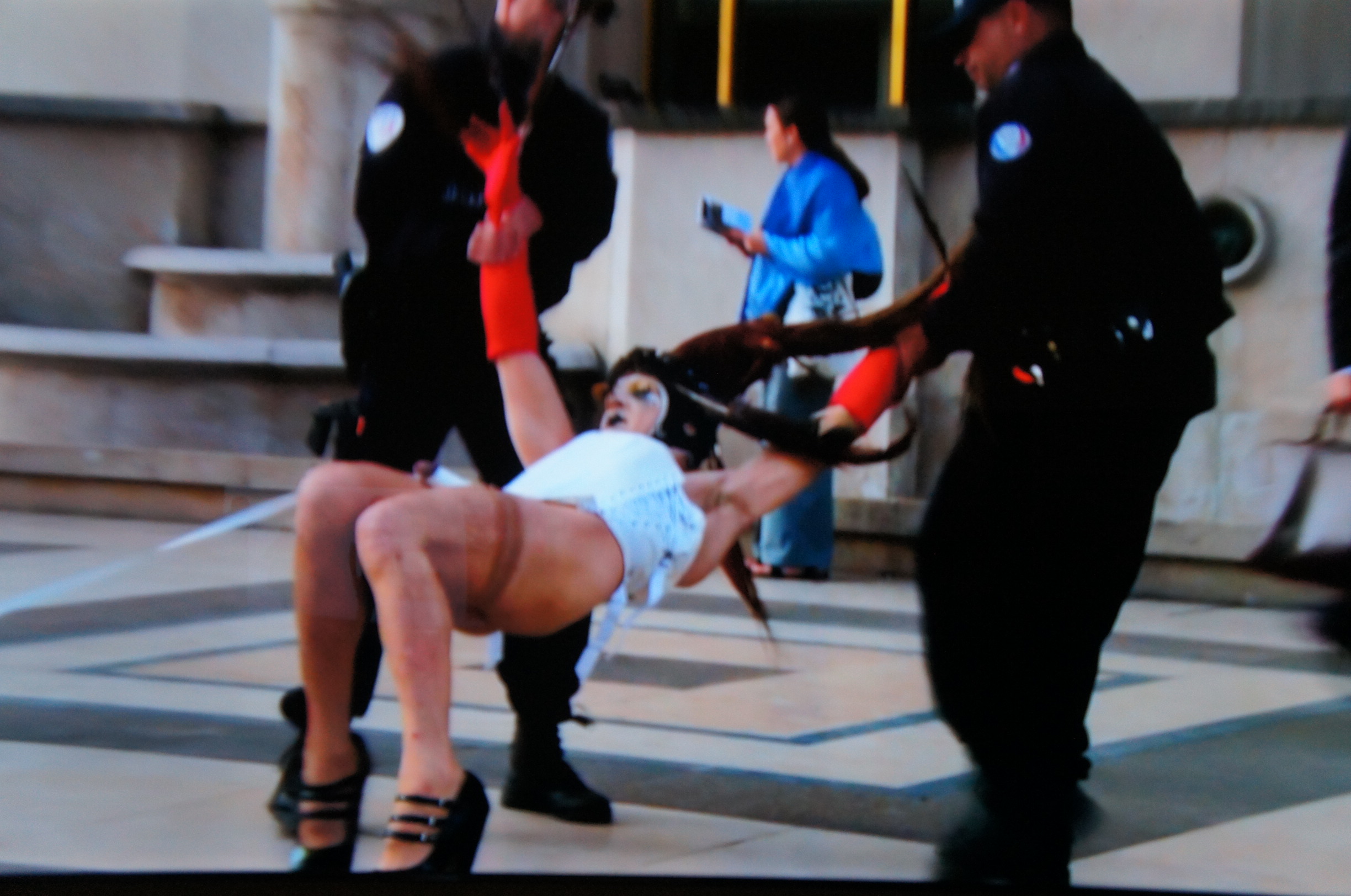
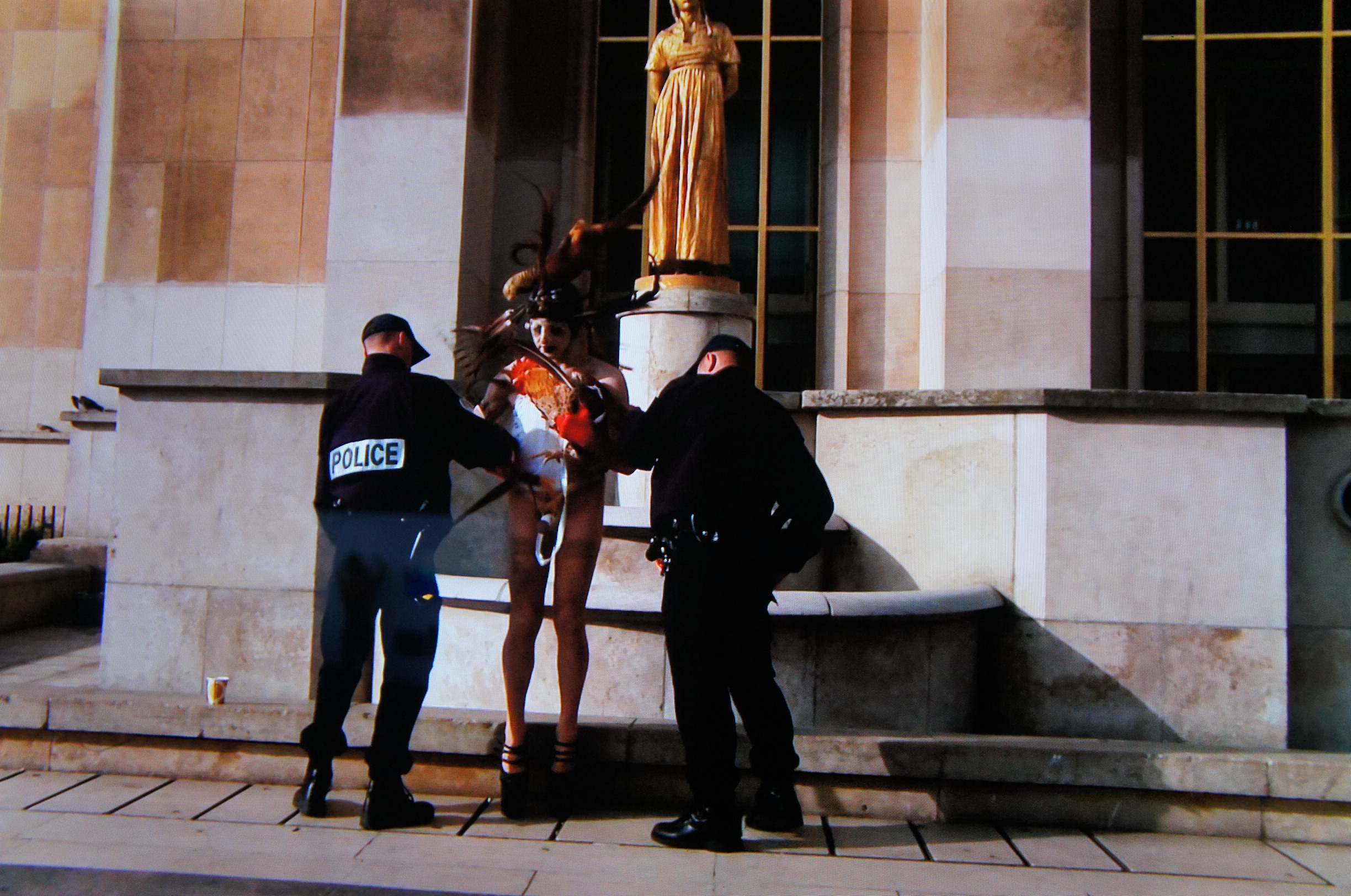
このエッセイで書くのは、Steven Cohenという作家のパフォーマンス作品、COQのことだ。本作品は、前回のエッセイ、MAC VALの展覧会《Chercher le garçon》(Link : Last article)において現行展示中の作品だ。作者であるスティーヴン・コーヘン(Steven Cohen)は1982年に南アフリカ生まれた。アフリカ出身、ホモセクシュアル、ドラグクイーンとしてパリに暮す。2013年に、「人権広場」(エッフェル塔を見るための観光客があつまるシャイヨー宮殿)にて、自分のペニスにリボンを結び、そのリボンのもう一端にニワトリを繋いで、15センチあるいは20センチほどあろうというハイヒール、下半身をほぼ露出したコスチューム、ニワトリを思わせる羽飾りを纏って優雅に舞うというパフォーマンスを行なった。始終はヴィデオに収められており、その奇異な外観ーリボンを巻いた性器を露出し、ニワトリを引き連れているーにも関わらず、人権広場の観光客たちはさほど動揺した様子はない。スティーヴン・コーヘンは、パフォーマンスを続け、青空の中にそびえるエッフェル塔を背に、鳥の羽根のシルエットが美しいコスチュームで舞う。アーティストはフランス国家「ラ・マルセイエーズ」(La Marseillaise)を歌い続ける。飛べないニワトリはときどき一メートル程の高さより羽ばたいては歩き、スティーヴン・コーヘンは始終このニワトリを真のパートナーあるいは分身のように大切に扱う。程無く、警備の男が近寄る。数分の後、二人の警官がスティーヴン・コーヘンを囲み、壁際に連行する。アーティストは激しくは抵抗しないもののニワトリを守ろうと抱きかかえる。さて、この広場は先に書いたように1948年以降「人権広場」と呼ばれている。それは、1948年の世界人権宣言を採択した国際連合の総会が、このシャイヨー宮殿で行なわれたからだ。全ての人々は平等である、つまり、それがアフリカンでもホモセクシュアルでも、どの宗教を信仰していようと変わらず平等である、そして宣言によれば皆表現の自由を有する。スティーヴン・コーヘンの実験は、彼が警官に捉えられるという形で幕を下ろし、この作品は長い間訴訟によって公開も叶わなかった。
SONY DSC
SONY DSC
SONY DSC

スティーヴン・コーヘンの奇妙な行為をよりよくわかるために幾つかの情報を書き加えておきたい。

(I)
まず、なぜニワトリなのか。

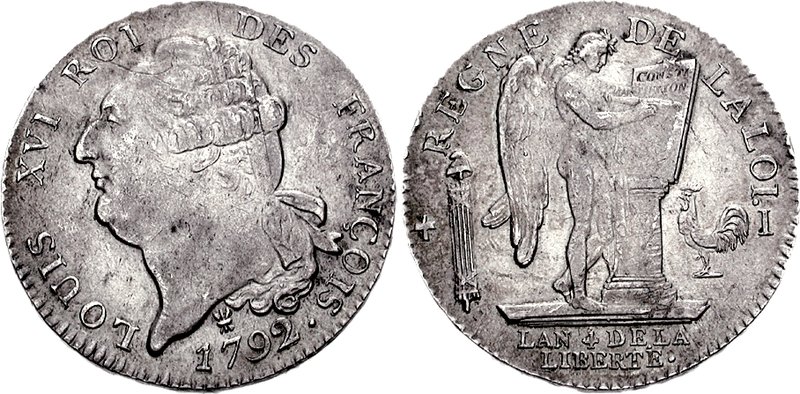
ニワトリは、フランスの象徴の鳥だったのである。つまり政治的・国民的エンブレムを担っていた。中世より使用され始め、ルネッサンス期以降フランスの国王の象徴、とりわけヴァロワ朝とブルボン朝の時代、国王はしばしば肖像画にニワトリを伴ったり、銀貨にニワトリが描かれたりした。ナポレオンが « Le coq n’a point de force, il ne peut être l’image d’un empire tel que la France ».(ニワトリなんかダメだ!強い鷲にしよう!)といって国鳥を鷲にしてしまうまではニワトリこそフランスを象徴する鳥だった。つまり、元フランスを象徴する鳥であるニワトリを、性的被差別者であるペニスに結びつけたリボンによって引き連れることの比喩的意味が明らかになるだろう。

Coq gaulois, monument dédié aux Girondins, Esplanade des Quinconces, Bordeaux

Coq gaulois, monument dédié aux Girondins, Esplanade des Quinconces, Bordeaux

Écu constitutionnel, 1792

Écu constitutionnel, 1792

(II)
つぎに、世界人権宣言採択の現場であるシャイヨー宮殿をパフォーマンスの場として選択する意味についてである。シャイヨー宮殿は、世界中からエッフェル塔の名写真を撮影するために観光客や写真家がおとずれるほど、フランスのイメージのひとつであるエッフェル塔が最も美しく俯瞰できる場所として知られている。おそらくその強烈なシチュエーションからか、1940年6月にナチスドイツの侵攻によって陥落したパリを、ヒトラーが訪れ、ここでエッフェル塔を背景に撮影した写真が有名である。したがって、この場所は、ナチスドイツによって陥落したパリと、世界人権宣言が採択された人権擁護の象徴としてのパリと、今日のフランスのあらゆるイメージを背負ったモニュメント「エッフェル塔」が見える場所、という三重の意味を担うのだ。スティーヴン・コーヘンがこの場所を選択し、警官に連行されることも戦略的計算に入れた上で、エッフェル塔を背景にパフォーマンスを行なった意味もこれで明らかになるだろう。

Paris, Eifelturm, Besuch Adolf Hitler

(III)
ちなみに、パフォーマンス中、アーティストが口ずさんでいたフランス国家「ラ・マルセイエーズ」は、フランス革命の際にマルセイユの義勇軍が歌ったとされ、それ以来のものである。

ご覧のように、スティーヴン・コーヘンのパフォーマンス「COQ」(ニワトリ)は、彼自身の抱える性的な問題の個人的苦悩を越えて、人類の人権の問題、移民の人権、性的マイノリティの人権、人種差別撤廃の希求という大きなディメンションに及んだ作品である。
SONY DSC
もう一つ、全く別の問題を指摘して、このエッセイを締めくくりたい。それは、この作品を展示する側の戦略的態度である。本作品はスティーヴン・コーヘンの下半身や性器が殆ど露出された映像作品で、客観的なヴィジュアルの美しさとエキセントリックな状況のコントラストのなかで、一見するとただただ滑稽、「なぜこれがアートなの?」という議論のなかに煙に巻かれる作品でもあるし、あるいは性的マイノリティーと表現の自由の問題に収斂される可能性もある作品だ。しかし、この展覧会が2015年3月より始まっていること、それがはっきりとシャルリー・エブドの後の社会的・政治的文脈の影響下にあるということ(もちろん作品選択や企画はその前に決定されているが、展覧会開催に当たり美術館側は問題に意識的にならざるをえないし、鑑賞者も当然考慮するに違いないということ)、そして上述したように様々な政治的エンブレムが散りばめられていることを思えば、この作品が展示されるという意味は、極めて愛国主義的なものであると考える。つまり、政治的で、戦略的な態度であると、思うのである。そしてこれもまた、美術館の「権利」であると思う。

スクリーンショット 2015-03-19 12.44.31

(コーヘンの作品に関連して以下に世界人権宣言の部分を添付した。)
『世界人権宣言』
(1948.12.10 第3回国連総会採択)
〈前文〉
人類社会のすべての構成員の固有の尊厳と平等で譲ることのできない権利とを承認することは、世界における自由、正義及び平和の基礎であるので、

人権の無視及び軽侮が、人類の良心を踏みにじった野蛮行為をもたらし、言論及び信仰の自由が受けられ、恐怖及び欠乏のない世界の到来が、一般の人々の最高の願望として宣言されたので、 

人間が専制と圧迫とに対する最後の手段として反逆に訴えることがないようにするためには、法の支配によって人権を保護することが肝要であるので、(略)

人類社会のすべての構成員の固有の尊厳と平等で譲ることのできない権利とを承認することは、世界における自由、正義及び平和の基礎であるので、

人権の無視及び軽侮が、人類の良心を踏みにじった野蛮行為をもたらし、言論及び信仰の自由が受けられ、恐怖及び欠乏のない世界の到来が、一般の人々の最高の願望として宣言されたので、 

人間が専制と圧迫とに対する最後の手段として反逆に訴えることがないようにするためには、法の支配によって人権を保護することが肝要であるので、(略)

よって、ここに、国連総会は、

社会の各個人及び各機関が、この世界人権宣言を常に念頭に置きながら、加盟国自身の人民の間にも、また、加盟国の管轄下にある地域の人民の間にも、これらの権利と自由との尊重を指導及び教育によって促進すること並びにそれらの普遍的措置によって確保することに努力するように、すべての人民とすべての国とが達成すべき共通の基準として、この人権宣言を公布する。

第2条
すべて人は、人種、皮膚の色、性、言語、宗教、政治上その他の意見、国民的もしくは社会的出身、財産、門地その他の地位又はこれに類するいかなる自由による差別をも受けることなく、この宣言に掲げるすべての権利と自由とを享有することができる。
さらに、個人の属する国又は地域が独立国であると、信託統治地域であると、非自治地域であると、又は他のなんらかの主権制限の下にあるとを問わず、その国又は地域の政治上、管轄上又は国際上の地位に基ずくいかなる差別もしてはならない。

第19条
すべて人は、意見及び表現の自由を享有する権利を有する。この権利は、干渉を受けることなく自己の意見をもつ自由並びにあらゆる手段により、また、国境を越えると否とにかかわりなく、情報及び思想を求め、受け、及び伝える自由を含む。

03/17/15

chercher le garçon MAC VAL /展覧会「少年をさがせ」

Chercher le garçon
MAC VAL
7 mars – 30 août 2015
Commissariat : Frank Lamy
SONY DSC
MAC VAL の今回の企画展が「100人の男性アーティストの展覧会」だというのは、2009年にCentre Pompidouで行なわれた展覧会《ELLES》が200人の女性アーティストを集めた展覧会であったのを意識し、今度はそのカウンターとして男性性の再定義を試みる展覧会を行なおうとしたのだろうと思う。今日の世界で、男性性を再定義する…。最初の問いは、今日、男性性の再定義が必要なのか?である。このことは、例えば、後に紹介するし別の記事でもとりわけ論じようと思っているSteven Cohenのパフォーマンスなどを通じて、問わざるを得ないことが明らかになる。この展覧会の特徴は、男性性を問いながらも別の様々な社会問題と精神的問題、さらには一定の方法で政治問題にも鑑賞者の目を向けさせることを意図している。
SONY DSC
Saint Titre 2009, David Ancelin

Emilio Lopez-Mencheroはベルギー生まれのアーティストである。Trying to be Cindy(2010)は、1950-60年代のステレオタイプなアメリカ社会の女性表象に問いかけたシンディー・シャーマンの有名な作品のパロディである。この作家は、ピカソやフリーダ・カルロといった人物に成りすます作品も制作しており、男性的な顔や肉体をもつEmilio Lopez-Mencheroがシンディー・シャーマンの画面にあてはめられることによって、アイデンティティの問題に訴えかける。
SONY DSC
日本人現代美術家の森村泰昌の手法もEmilio Lopez-Mencheroと共通項を持つ。ブリジッド・バルドーに扮したアーティストは、明るすぎる光の中で、Emilio Lopez-Mencheroがしたのとは異なる方法で、対象のイコンをすり替えようとしている。
SONY DSC

John Coplansは2003年に亡くなったニューヨークを拠点に活動したアーティストだ。本作品は1993年のものである。拡大され過ぎて、毛穴も毛も皮膚のやや乾燥した質感も、ホクロも全てがさらけ出された脚のプロフィール。この写真は、どれだけ拡大して部分だけが提示されても、他には何の個人を特定するアイデンティティや全体のイメージがなくても、それが女性の肉体ではなく、男性の肉体であるということが分かってしまう。肉体の性的アイデンティティは、それが明確な差異と認められる性器などでないとしても、一部を認めるだけで、いとも簡単に識別できるほど、時には明らかなものである。そうかと思えばそれは別のコンテクストでは揺るがされて、識別不能に陥ることすらある掴みにくいものだ。
SONY DSC

Florent Matteiは1970年ニース生まれの写真家である。シリーズ《The World is Perfect》(2000-2001)では、ゴージャスなホテルで過ごす一組のカップルのある意味理想的で典型的なイメージを構成する。念入りに組み立てられた画面は、ステレオタイプな豪奢や愛のイメージに忠実にしたがっているものの、どこか重要な場所がすり替えられたりこわされたりすることによって、滑稽なイメージとして作り直される。なぜ小柄な男性の腰を後ろから抱く大きな女性という構図が違和感を想起させるのだろう。それは、我々がいかに日頃典型的イメージを刷り込まれているかを明らかにするばかりである。
SONY DSC
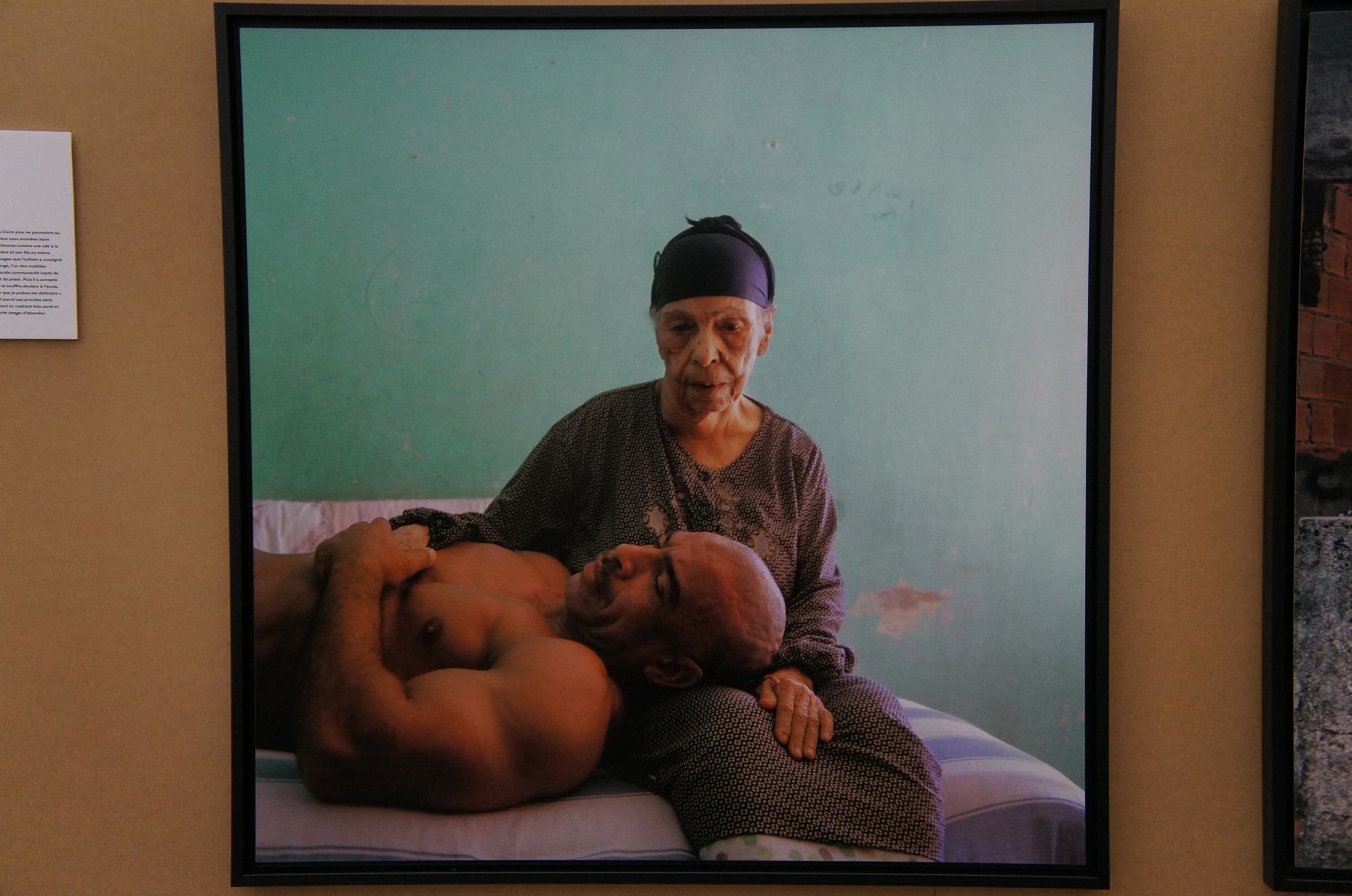
Denis Dailleuxのシリーズ《Mère et Fils》(母と息子)は、また異なる男性性の物語を我々に伝える。母と息子の結びつき、母の絶対的な愛とそれを受けた息子の母との関係性は、それぞれの写真を見ても人目で分かる、異なる歴史と物語がある。Denis Dailleuxは、このシリーズをカイロで撮り始め、のち、ガーナとブラジルでも撮影している。モデルとなるのはボディビルダーの息子とその母親である。磨き上げられたボディビルダーの肉体はおそらく、非常に「男らしい」はずであり、それは女である母親が彼らを産んだにも関わらず似ても似つかない形をしている。だが、その男性性の象徴であるようなボディビルダーの肉体もまた、何らかの成り行きによって創り出されたものなのだ。ボディビルダーのうちの一人が言う。「母親は自分の一部だ。子供の時学校でいじめられていた。そのとき、身体を鍛えなさい、自分を守れるように筋肉をつけなさい、と言ったのは母親だった」、と。男性性は産んだ子を守ろうとする女性性によっても創られることができる。
SONY DSC
SONY DSC

子供が書いたような筆致で描かれたネオン、《Now I wanna be a Good Boy》(いい子になりたい)は、Claude Lévêqueの作品である。Claude Lévêqueは、ネオンという一般に街頭広告に用いるメディアを、個人的な声明やアイデンティティに関する問いなど、まったく異なる目的に使用することによって、その親密な問いを明るみに出す。いい子にならなければならない、子供時代に受け続けるそんなプレッシャーは、皆の目に触れるネオンとなることによって、異化されるだろうか。
SONY DSC
Steven Cohenは南アフリカ共和国生まれのアーティストで、ホモセクシュアル、ドラグクイーンである。2013年9月10日、トロカデロの人権広場にてパフォーマンスCOQを行なった。人権広場というのは、エッフェル塔をセーヌ川を挟んで臨むのに最適な観光スポットとして、いつも観光客で溢れている。15センチはあるのではないかというハイヒールに下半身を殆ど露出した白いコスチュームで、自らの性器にリボンを巻き、そのリボンは一羽の立派な鶏に結ばれている奇妙な姿で、悠々と観光客の前に登場し、エッフェル塔をバックにダンスする。人権広場は歴史的に、人々がありのままに存在する自由、それがホモセクシュアルであれ、外国人であれ、宗教を異にし、ドラグクイーンでも、人権を認められるべき空間である。そこで、Steven Cohenは下半身をほぼ露出し、性器をリボンで飾り立てたような格好で登場し、約10分ほどすると、二人の警官によって捉えられた。Steven Cohenの対峙したものは大きい。それは彼自身のセクシュアリティのみならず、民族や政治の問題に及んだのだから。
SONY DSC
SONY DSC

このSteven Cohenのパフォーマンスの意味については次回のエッセイでより発展させたいと思う。

展覧会《Chercher le garçon》(少年をさがせ)は、男性性の再定義よりもむしろ、男性性のあり方の発見をアーティストの研究成果として見せる機会だったのかもしれない。

SONY DSC